Best Osseodensification Burs Kit
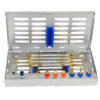
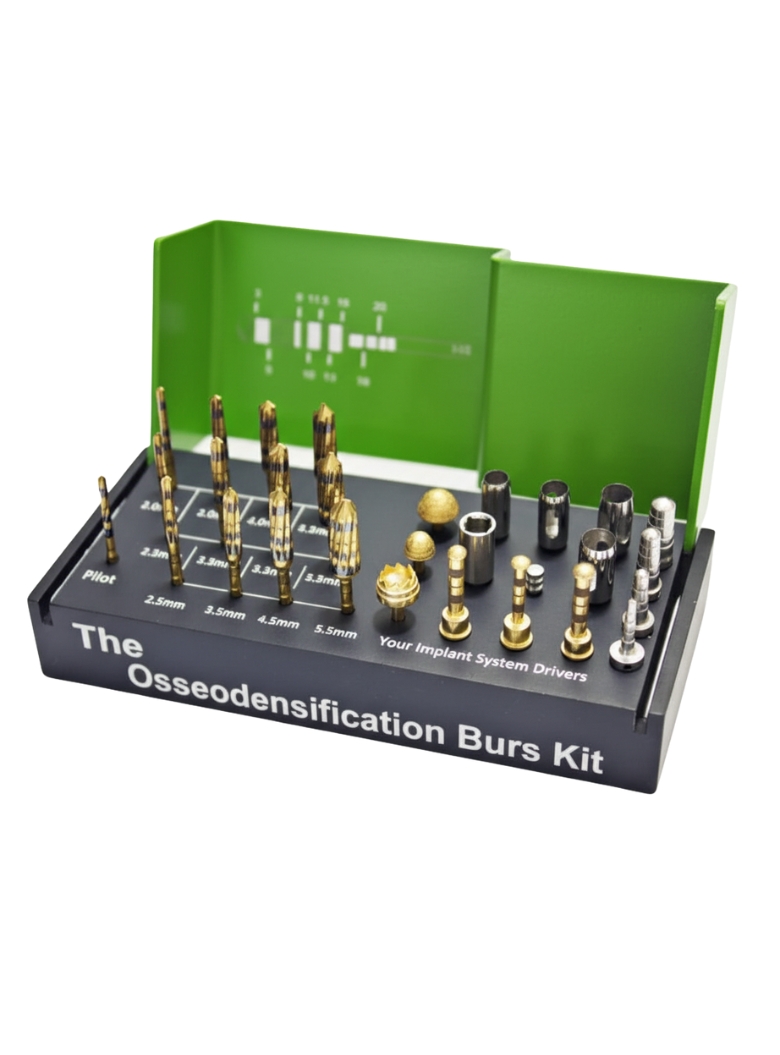
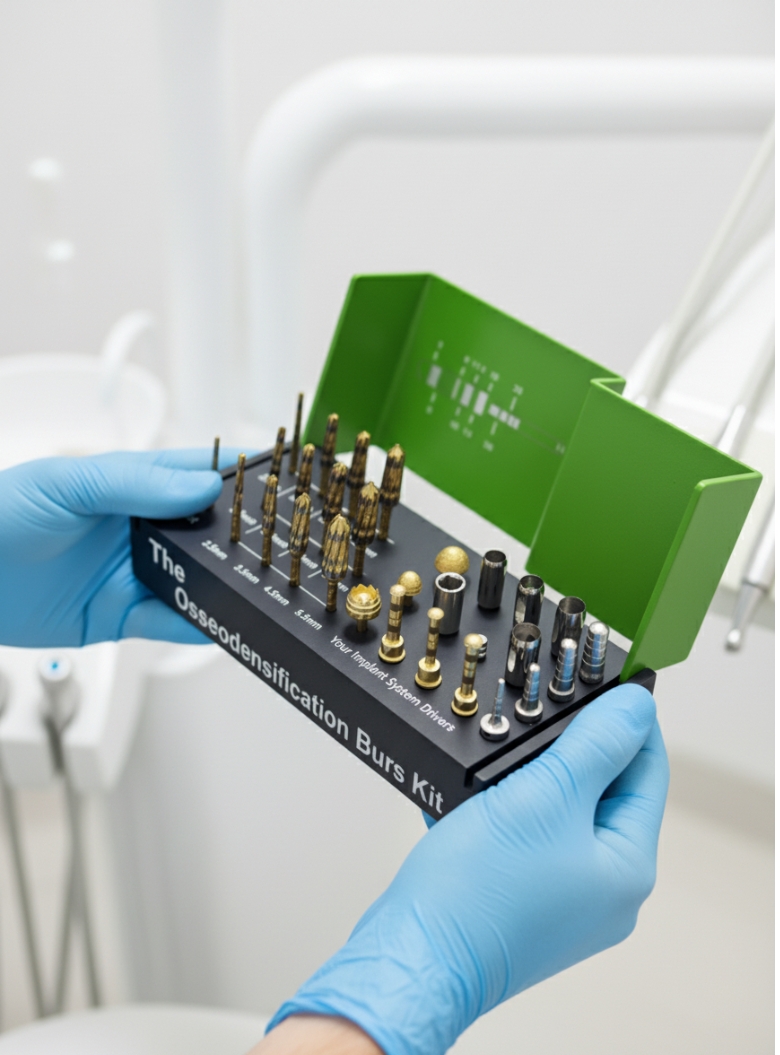
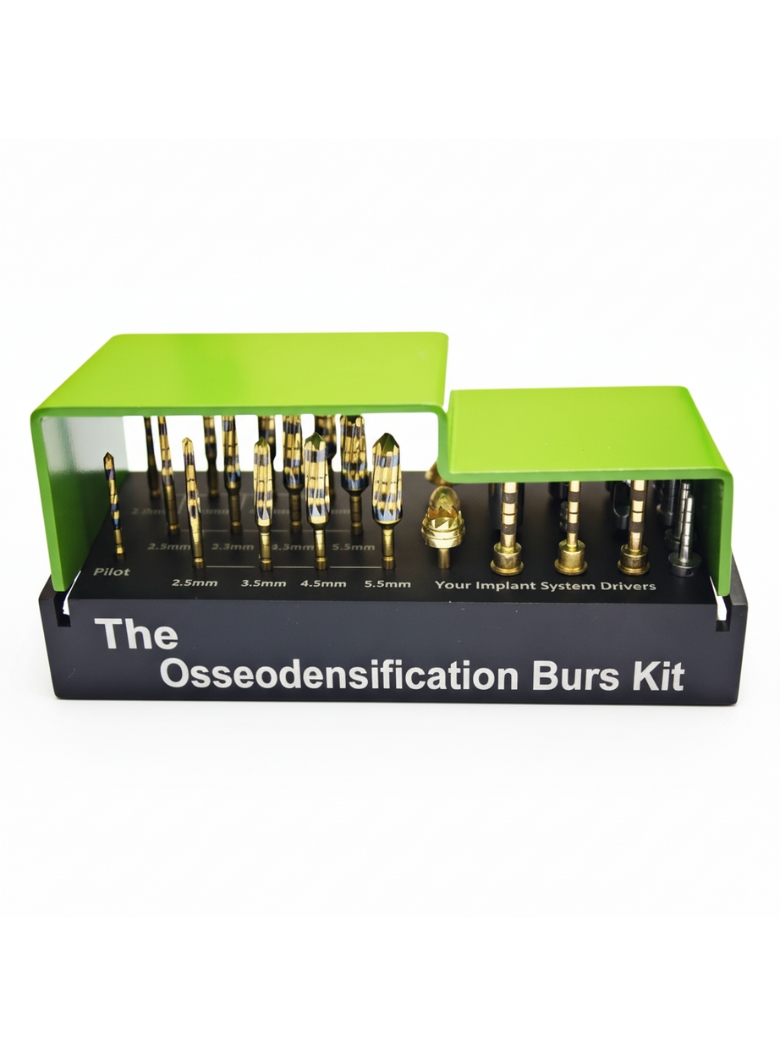
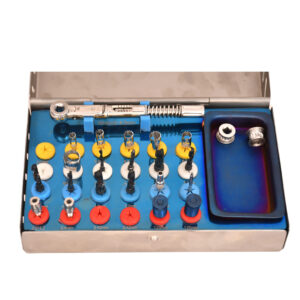
The Osseodensification Burs Kit is engineered for advanced dental implant placement, featuring tapered burs, sinus lift reamers, and parallel pins for precise and controlled drilling. This comprehensive implantology kit supports accurate bone preparation, improved implant stability, and predictable clinical outcomes.
The Amois Surgical Osseodensification Burs Kit is designed to enhance implant stability by preserving and compacting bone during osteotomy preparation. This modern technique, supported by clinical research, improves primary stability and promotes superior osseointegration.
Equipped with sinus lift reamers, tissue punches, parallel pins, and tapered drills, the kit enables controlled implant site preparation and lateral approach sinus lift procedures. The externally irrigated, precision-engineered burs allow smooth cutting while minimizing heat generation and bone trauma.
Ideal for implantologists and oral surgeons, this kit delivers versatility, accuracy, and reliability across a wide range of dental implant procedures—making it an essential solution for advanced implant dentistry.
Core Instruments Included
Parallel Pins & Accessories
| Instrument | Quantity | Primary Use | Design Features |
|---|---|---|---|
| Parallel Pin | 1 | Implant positioning and alignment | Straight, precision-marked |
| Parallel Pin (XL) | 2 | Deep implant alignment | Extra-long, straight design |
| Parallel Pin (Standard) | 2 | Osteotomy parallelism guidance | Cylindrical, standard length |
| Ratchet Extender | 1 | Extends ratchet reach | Slim elongated stainless-steel design |
Tissue Punches
| Size (mm) | Clinical Use | Design Features |
|---|---|---|
| 3.5 mm | Soft tissue access for narrow implants | Sharp circular cutting edge |
| 4.0 mm | Medium implant access | Stainless steel circular punch |
| 4.5 mm | Standard implant access | Wider reinforced cutting edge |
| 5.0 mm | Large implant osteotomy | Durable circular design |
| 5.5 mm | Wide-platform implants | Smooth, wide cutting surface |
Osseodensification Drill Sizes
| Drill Code | Diameter (mm) | Primary Usage | Design Features |
|---|---|---|---|
| 1525 | 2.0 | Pilot osteotomy | Slim, straight fluted |
| 2535 | 3.0 | Osteotomy enlargement | Tapered, externally irrigated |
| 3545 | 4.0 | Bone preparation | Controlled fluted cutting |
| 4555 | 5.0 | Wide implant osteotomy | Precision external irrigation |
| 1828 | 2.3 | Narrow site drilling | Slim tapered design |
| 2838 | 3.3 | Intermediate drilling | Straight with tapered tip |
| 3848 | 4.3 | Medium implant sites | Tapered cutting geometry |
| 4858 | 5.3 | Large implant preparation | Fluted, precision cut |
| 2228 | 2.5 | Stepwise enlargement | Narrow, irrigated |
| 3238 | 3.5 | Medium step drilling | Straight, controlled cutting |
| 4248 | 4.5 | Bone expansion | Reinforced tapered edge |
| 5258 | 5.5 | Final wide osteotomy | Large tapered, irrigated |
| Pilot Drill | 1.6 | Initial osteotomy guide | Short tapered pilot point |
Membrane Sinus Lift – Lateral Reamer Drills
| Reamer Size (Ø) | Procedure Use | Design Features |
|---|---|---|
| Ø3.3 mm | Initial sinus wall penetration | Rounded atraumatic head |
| Ø3.7 mm | Enlarged sinus access | Smooth, controlled cutting |
| Ø6.0 mm | Sinus cavity expansion | Broad, membrane-safe edges |
| Ø8.0 mm | Lateral sinus lift | Large rounded reamer |
| Ø8.0 mm Cutter Membrane | Final lateral entry | Precision wide cutter |
Complete Implant Burs Kit Overview
| Component | Quantity | Clinical Benefit |
|---|---|---|
| Long Dental Implant Burs | 13 | Deep implant compatibility |
| Short Dental Implant Burs | 7 | Shallow osteotomy preparation |
| Parallel Pins (Standard + XL) | 4 | Accurate alignment and parallelism |
Technical Specifications
-
Material: Premium surgical stainless steel
-
Tissue Punch Sizes: 3.5 mm – 5.5 mm
-
Drill Sizes: 2.0 mm – 5.5 mm
-
Reamer Sizes: Ø3.3 mm – Ø8.0 mm
-
Design: Tapered, externally irrigated burs with parallel pin system
-
Speed Range: 800 – 1500 RPM
-
Operating Modes:
-
Cutting Mode (Clockwise): 800–1500 RPM
-
Densifying Mode (Counter-clockwise): 800–1500 RPM
-
Usage Note
Instrument selection may vary based on clinician preference, implant system, and patient anatomy. Additional instruments may be required depending on procedural requirements.
Explore more professional Dental instruments:
- Dental Implant Collection → /dental-implant
- Dental Instruments Category → /Dental-instruments
For company updates, product showcases, and the latest surgical instruments, visit our official pages:
Related products

Dental Implants
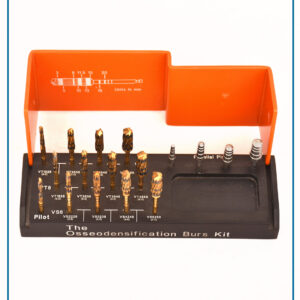
Dental Implant Kit
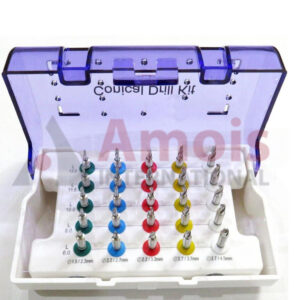
Dental Implants
Dental Implants
Dental Implants
Dental Implants

Dental Implant Kit
Dental Implant Kit
Dental Implant Kit


Dental Implants
Sterile Smile: Dental Implant Kit Auto Clave for Precision Care